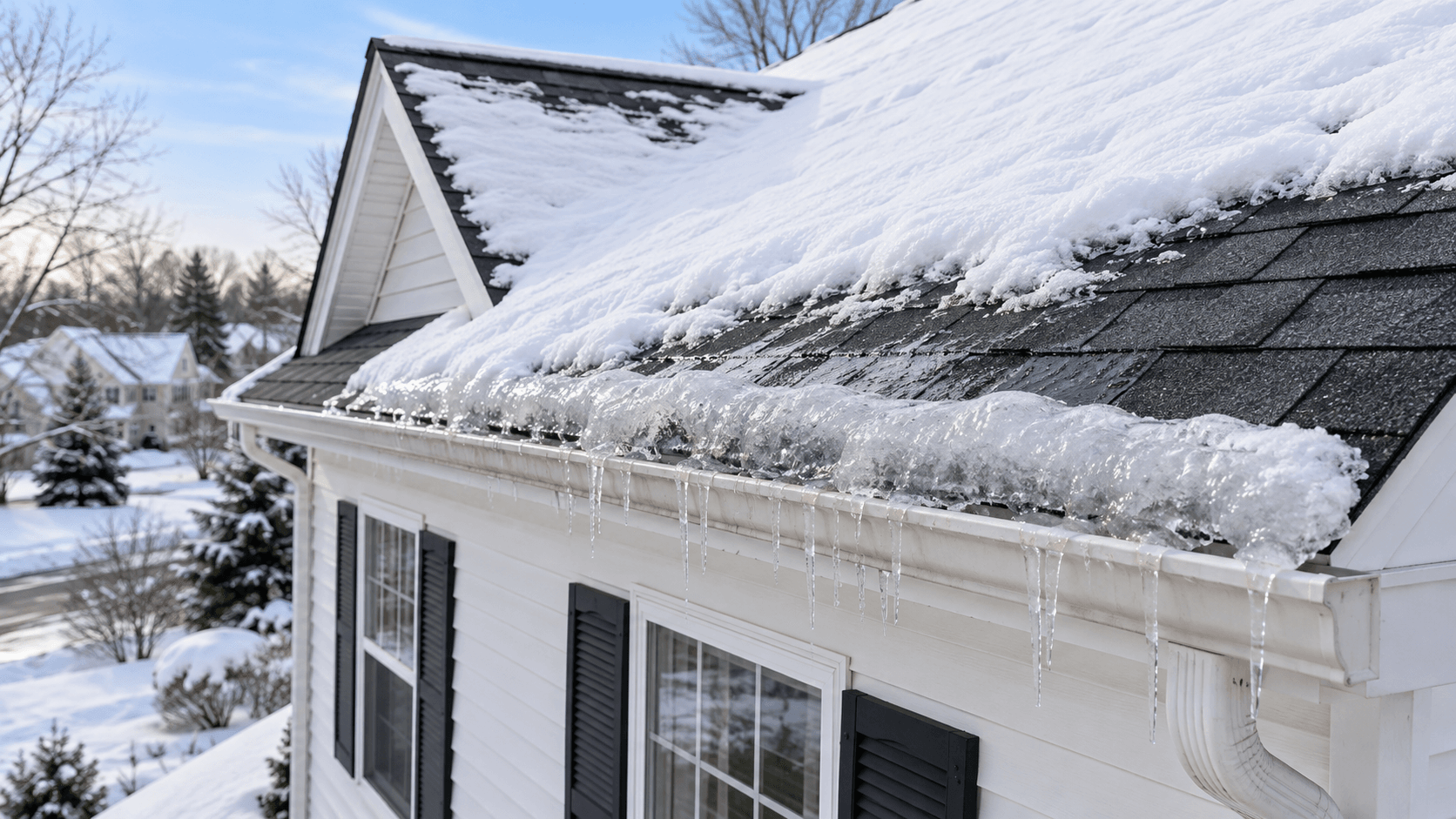
Roof repair vs. replacement comes down to three things: how old the roof is, how widespread the damage is and whether the problems keep coming back. A repair usually makes sense when damage is limited to one area on a roof that still has years of life left. A replacement is usually the better investment when the roof is near the end of its lifespan, shows wear across many slopes or leaks in different places after repeated fixes.
If you have been eyeing your roof every time you back out of the driveway, you are not alone. Most homeowners only think about the roof when something looks off, and then the big question shows up fast: patch it or replace it? This guide walks you through the signs you need a new roof, when a repair is enough and how to make a smart decision for your Delaware home.
Key takeaways
- Repair when damage is limited to one area, the roof is roughly under 15 years old and the decking is solid.
- Replace when the roof is 20 or more years old, shingles are curling or losing granules across the roof, or leaks keep returning.
- A quick check from the ground and the attic tells you a lot, but a professional inspection gives you the full picture.
- If repair costs start adding up to a large share of a new roof, replacement usually saves money long term.
Start With the Age of Your Roof
The simplest first step is finding out when your roof was installed. Check your home purchase paperwork, permits or old invoices, or ask the previous owner if you can. Age does not decide everything, but it frames the whole conversation.
Standard asphalt shingle roofs commonly last about 15 to 30 years, depending on the shingle quality, ventilation, installation and weather exposure. A roof installed over an older layer of shingles often has a shorter life, because heat builds up and the new layer cannot lie as flat. For a deeper look by material, see our guide on how long a roof lasts.
| Roof age (asphalt shingles) | What it usually means |
|---|---|
| Under 10 years | Most problems are repairable, and workmanship or product warranties may still apply. |
| 10 – 15 years | Repairs are often worth it if the rest of the roof looks healthy. |
| 15 – 20 years | Gray zone. Compare repair cost with remaining life before deciding. |
| 20+ years | Replacement is usually the smarter long-term choice, especially with repeat problems. |
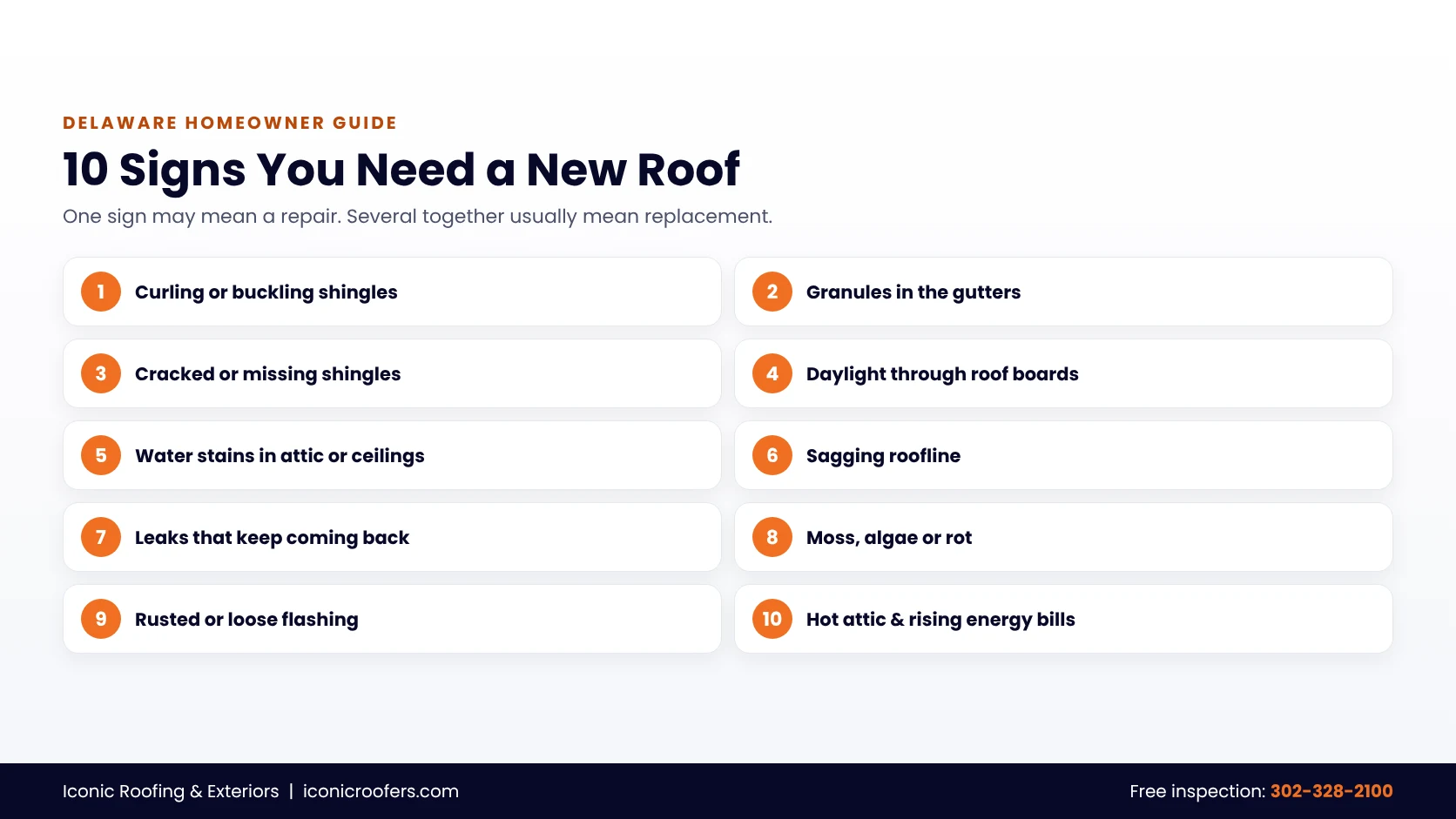
10 Signs You Need a New Roof
One sign on its own does not always mean replacement. When several of these show up together, it is time to start planning.
1. Curling or buckling shingles
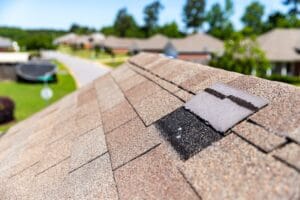
Shingle edges that turn up (cupping) or tabs that curl in the middle (clawing) have lost their flexibility. Curling usually spreads across the whole roof as it ages, and curled shingles are easy targets for wind.
2. Granules in the gutters
The colored granules protect asphalt from the sun. When you see a lot of them in gutters or at downspout outlets, and bare dark patches on the roof, the shingles are wearing out. A new roof sheds some loose granules at first, which is normal.
3. Cracked, broken or missing shingles across the roof
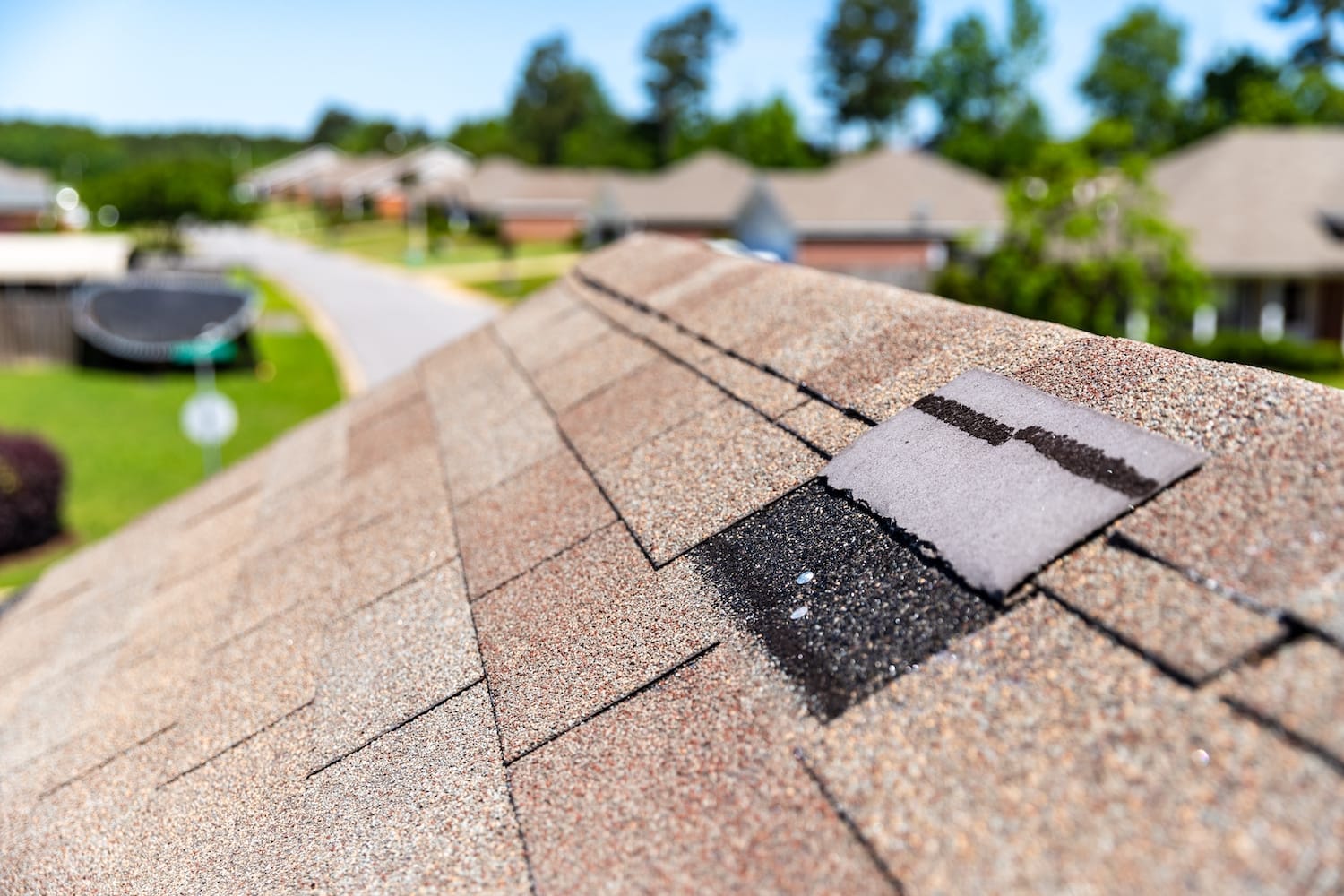
A few missing shingles after a storm can be repaired. Cracks and missing pieces on many slopes point to brittle, aging shingles that will keep failing.
4. Daylight through the roof boards
Go up into the attic on a sunny day with a flashlight. If you see light coming through the roof boards, water can get in too.
5. Water stains in the attic or on ceilings
Look for dark streaks on rafters and decking, damp insulation and stains on upstairs ceilings. One stain under a chimney may mean flashing. Stains in several places usually mean the roof is failing more broadly.
6. A sagging roofline
A dip or sag along the ridge or between rafters can signal moisture-damaged decking or structural problems. This needs a professional look right away.
7. Leaks that keep coming back
If you have repaired the same roof several times and new leaks keep appearing in different places, you are paying to patch a system that is wearing out as a whole.
8. Moss, algae and rot
Dark streaks from algae are mostly cosmetic. Thick moss holds moisture against the shingles, and soft or rotted spots underneath are a structural concern.
9. Damaged or rusted flashing
Flashing seals the roof around chimneys, walls, vents and skylights. Old, rusted or loose flashing is a common leak source. If the shingles around it are also worn, a full replacement lets the crew replace all flashing at once.
10. Rising energy bills and a hot attic
A failing roof with poor ventilation can make the attic very hot in summer and lead to moisture problems in winter. If your upstairs rooms are hard to keep comfortable, the roof system may be part of the reason. Our guide to roof ventilation explains why airflow matters.
When a Roof Repair Makes Sense
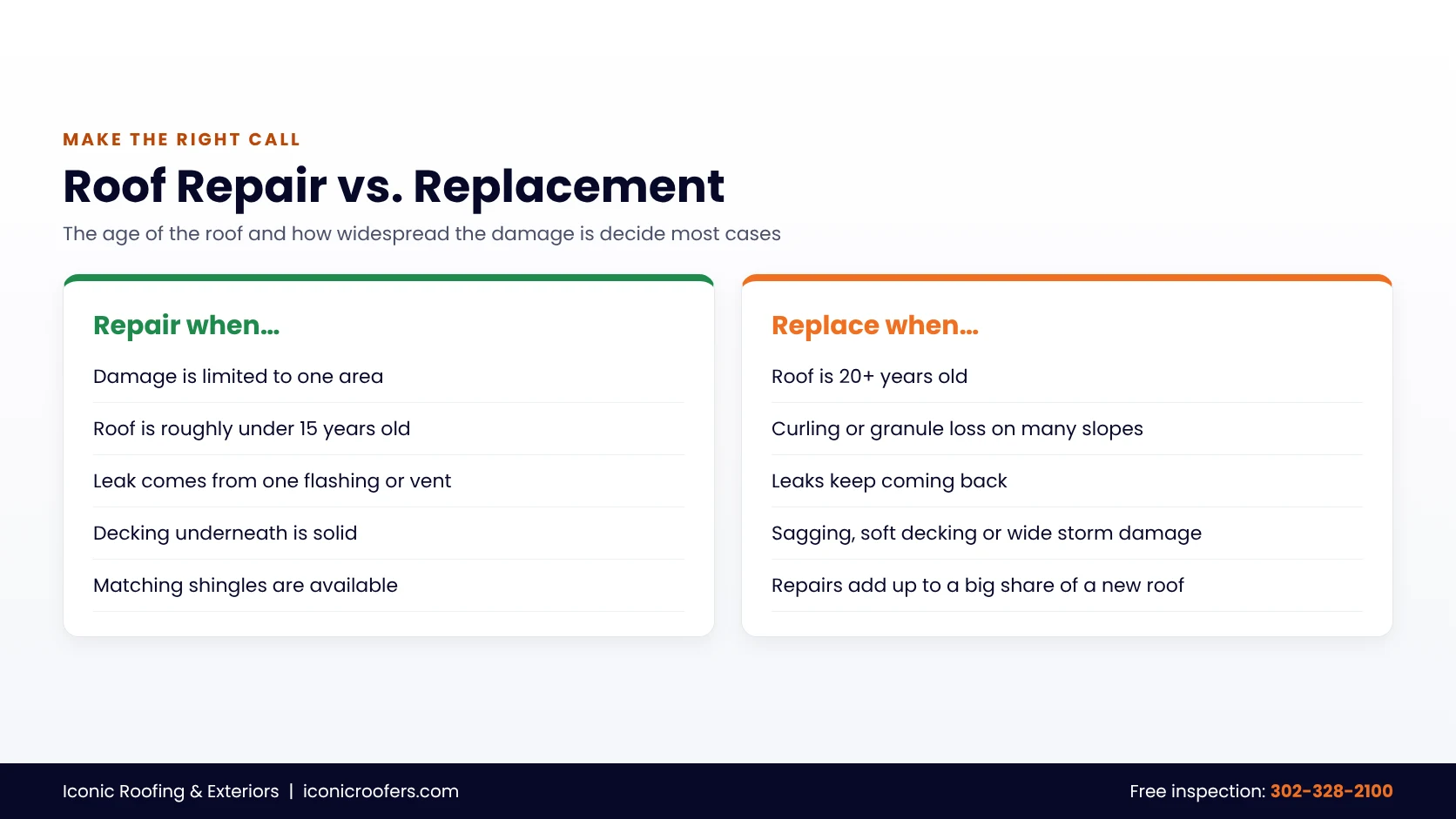
Repairs are the right call more often than many homeowners think. A repair usually makes sense when:
- The damage is limited to one area, such as a few shingles lifted by wind.
- The roof is roughly under 15 years old and the rest of it looks healthy.
- A leak traces back to one failed flashing, pipe boot or vent.
- The decking underneath is still solid.
- Matching shingles are still available, so the repair blends in.
A good roofer will tell you honestly when a repair is enough. Our roof repair services in Delaware cover leaks, storm damage, flashing and shingle repairs.
When Roof Replacement Is the Better Investment
Replacement usually makes sense when:
- The roof is 20 or more years old or close to the end of its warranty.
- Curling, cracking or granule loss shows up across many slopes.
- Leaks keep returning in different places.
- There is sagging, soft decking or widespread storm damage.
- Repair bills are adding up to a large share of the cost of a new roof.
- You plan to sell soon and want to avoid roof issues during inspection.
A new roof also gives you a fresh start: new underlayment, flashing, drip edge, ventilation and a new manufacturer warranty. See what is included with our roof replacement in Delaware.
Partial Roof Replacement: Is It Worth It?
Sometimes only one slope is badly damaged, for example the side that faces prevailing winds. Replacing that section can work when the rest of the roof is fairly new and the shingle color is still available. On older roofs, partial replacement often leaves a visible patch and an uneven lifespan, so you may end up replacing the rest a few years later anyway. Ask your roofer to compare both options in writing.
Comparing Cost: Repair vs. Replacement
Repairs cost far less up front, but they do not reset the clock on an aging roof. A simple way to think about it: if a repair costs a meaningful share of what a new roof would cost and the roof is already past the middle of its life, replacement usually delivers better value. You stop paying for patches, gain a new warranty and reduce the risk of interior water damage.
Every roof is different, so the most reliable comparison is a free inspection with written prices for both options. If replacement is the right move but the timing is tough, roof financing can spread the cost into monthly payments.
Repair or Replace Other Roof Types
Metal roofs
Metal roofs often last much longer than asphalt shingles. Most problems involve loose fasteners, worn washers, failed sealant at seams or damaged flashing, and these are usually repairable. Replacement becomes a question mainly when panels are badly rusted, dented across the roof or the coating has failed widely.
Flat and low-slope roofs
Flat roofs on porches, additions and rowhomes behave differently. A single puncture or open seam can be repaired. Large areas of ponding water, blistering or wet insulation usually mean replacement. A flat roof inspection should always check the insulation underneath, because wet insulation changes the decision.
Slate and cedar
Natural slate can last for generations, so individual broken slates are typically replaced rather than the whole roof. Cedar shakes need more maintenance, and widespread splitting or rot is usually a sign the roof is near the end of its life.
Questions to Ask Your Roofer Before You Decide
- What exactly is causing the problem, and can you show me photos?
- How much life does the rest of the roof have left?
- What would the repair cost, and what would replacement cost?
- Will the repair match the existing shingles?
- Is the decking solid, or will it need work either way?
- Does my attic have proper ventilation?
- What warranty comes with the repair, and with a new roof?
Honest answers to these questions usually make the decision clear. If a contractor pushes for a full replacement without showing you why, get a second opinion.
Do-It-Yourself Roof Check: Ground and Attic
From the ground
Walk around the house with binoculars or your phone zoomed in. Look for curling, missing or discolored shingles, sagging lines, damaged flashing around the chimney and granules piling up in gutters. Check siding and windows for water stains under the roof edges.
In the attic
Bring a flashlight and step only on joists or boards. Look for daylight, water stains, damp insulation, mold or a musty smell. Note where you see problems so a roofer can match them to the outside of the roof.
Please do not walk on your roof. It is easy to fall and easy to damage shingles. Leave rooftop inspections to a professional with the right safety gear.
What About Insurance?
If your roof was damaged by a sudden event such as wind, hail or a fallen tree, your homeowners insurance may help pay for repair or replacement. Damage from age and normal wear usually is not covered. Your policy and your insurer decide coverage, so check with your agent. We can inspect the roof, provide photos and a written estimate, and be present when the adjuster visits.
Frequently Asked Questions
Is it better to repair or replace a roof?
Repair is better when damage is limited and the roof has plenty of life left. Replacement is better when the roof is aging, damage is widespread or leaks keep coming back. A professional inspection with written options for both is the best way to decide.
How do I know if I need a new roof?
Common signs include curling or cracked shingles across the roof, heavy granule loss, daylight through the roof boards, repeated leaks, a sagging roofline and a roof that is 20 or more years old.
How often should you replace your roof?
Asphalt shingle roofs typically need replacement every 15 to 30 years. Metal, slate and tile roofs can last much longer. Ventilation, installation quality and weather exposure all affect the timeline.
Can you replace just part of a roof?
Yes, a single damaged slope can sometimes be replaced. It works best when the rest of the roof is fairly new and the shingles can be matched. On older roofs, a full replacement usually gives a better result.
Can a new roof go over the old one?
In some cases codes allow a second layer, but it is usually not the best choice. A full tear-off lets the crew inspect and repair the decking, install new underlayment and flashing, and helps the new shingles last as long as they should.
How long does a roof replacement take?
Most residential roof replacements in Delaware take about one to three days, depending on the size of the home, roof complexity and weather.
Get an Honest Roof Inspection in Delaware
Not sure if your roof needs a repair or a full replacement? Iconic Roofing & Exteriors offers free roof inspections across Delaware. We show you photos of what we find, explain your options in plain language and give you written pricing so you can decide with confidence.