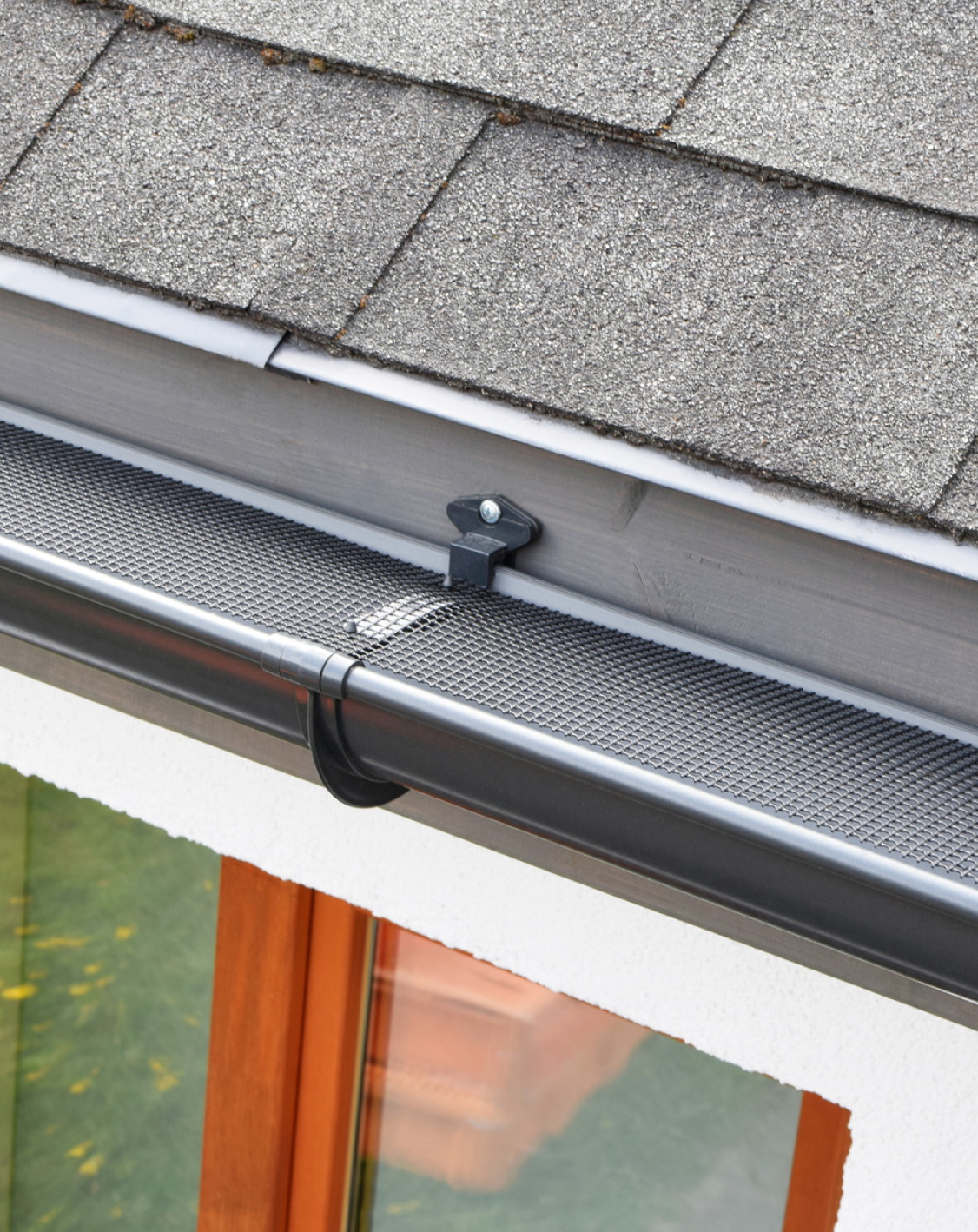
Roof flashing is thin, weather-resistant metal (usually aluminum, galvanized steel or copper) installed where the roof meets something else, such as a chimney, wall, skylight, vent or valley. Its job is to direct water away from those joints and back onto the shingles. Because these transitions are where roofs are most vulnerable, failed or poorly installed flashing is one of the most common causes of roof leaks.
Most homeowners never think about flashing until a stain appears on the ceiling near a chimney or skylight. This guide explains the different types of roof flashing, how to spot flashing problems, what repairs typically cost and when flashing should be replaced along with the roof.
Key takeaways
- Flashing seals the joints where the roof meets chimneys, walls, vents, skylights and valleys.
- Rust, gaps, loose pieces and dried-out sealant are common signs of failing flashing.
- Minor flashing repairs often cost about $150–$500; chimney flashing work commonly runs $400–$1,600.
- New flashing should be part of every full roof replacement.

What Does Roof Flashing Do?
Shingles are designed to shed water down the roof in overlapping layers. That system breaks wherever something interrupts it: a chimney, a wall, a pipe, a skylight or two roof planes meeting in a valley. Flashing bridges those gaps. It is layered with the shingles so water that runs against the obstacle is guided back on top of the roofing instead of into the house.
Types of Roof Flashing
Step flashing
Step flashing is made of small, bent metal pieces installed one at a time with each course of shingles where a roof meets a side wall or the sides of a chimney. Each piece overlaps the one below like steps, so water always runs down and out.
Counter flashing
Counter flashing covers the top edge of step or base flashing. On chimneys it is often set into a cut in the mortar joint, then sealed. It keeps water from running behind the flashing.
Chimney flashing
A complete chimney flashing system combines a front apron, step flashing on the sides, counter flashing and often a cricket (a small peaked structure) on the uphill side of wider chimneys to divert water. Chimneys are one of the most common leak sources on older Delaware homes.
Valley flashing
Valleys are where two roof slopes meet and channel a large volume of water. They may be protected with metal valley flashing or with ice and water shield and woven or closed-cut shingles. Either way, valleys must be built carefully because they handle so much runoff.
Drip edge
Drip edge is metal flashing installed along the eaves and rakes. It directs water into the gutters, protects the edge of the roof deck and fascia from rot and keeps wind-driven rain from getting under the first row of shingles.
Pipe boots and vent flashing
Plumbing vent pipes and exhaust vents pass through the roof deck. They are sealed with flashing collars, often with a rubber gasket (pipe boot). Rubber boots crack in the sun over time and are a very common leak point.
Skylight flashing
Skylights use flashing kits designed by the manufacturer to work with the shingles. Leaks around skylights are frequently flashing problems, not glass problems.
Headwall and sidewall flashing
Where a roof meets a vertical wall above it (headwall) or beside it (sidewall), flashing must tuck behind the siding or be covered by it. Missing kick-out flashing at the bottom of a sidewall can send water into the wall instead of the gutter.
Signs of Roof Flashing Problems
- Water stains on ceilings or walls near chimneys, skylights or where a roof meets a wall
- Rust, holes or corrosion on visible flashing
- Flashing that is bent, lifted or pulling away from the chimney or wall
- Cracked or missing caulk and sealant at counter flashing
- Cracked rubber pipe boots
- Stains or rot on siding or trim below where roof meets wall
- Damp or discolored decking around penetrations in the attic
Many flashing leaks only show up during heavy, wind-driven rain. If a stain appears and disappears with certain storms, flashing is a prime suspect. Our guide to roof leak repair cost explains how leaks are traced to their source.
What Causes Flashing to Fail?
Age and corrosion
Metal flashing can corrode over time, especially where different metals touch or where debris holds moisture against it.
Sealant breakdown
Caulk and sealant dry out and crack with sun and temperature swings. Good flashing relies on overlap first and sealant second, but failed sealant still lets water in.
Movement
Houses and chimneys expand, contract and settle. Over years that movement can open gaps.
Storm damage
High winds can bend or lift flashing. Our guide to storm damage roof repair covers what to check after severe weather.
Poor installation
Reusing old flashing, relying on caulk instead of proper step flashing, or missing kick-out flashing are common shortcuts that cause leaks.
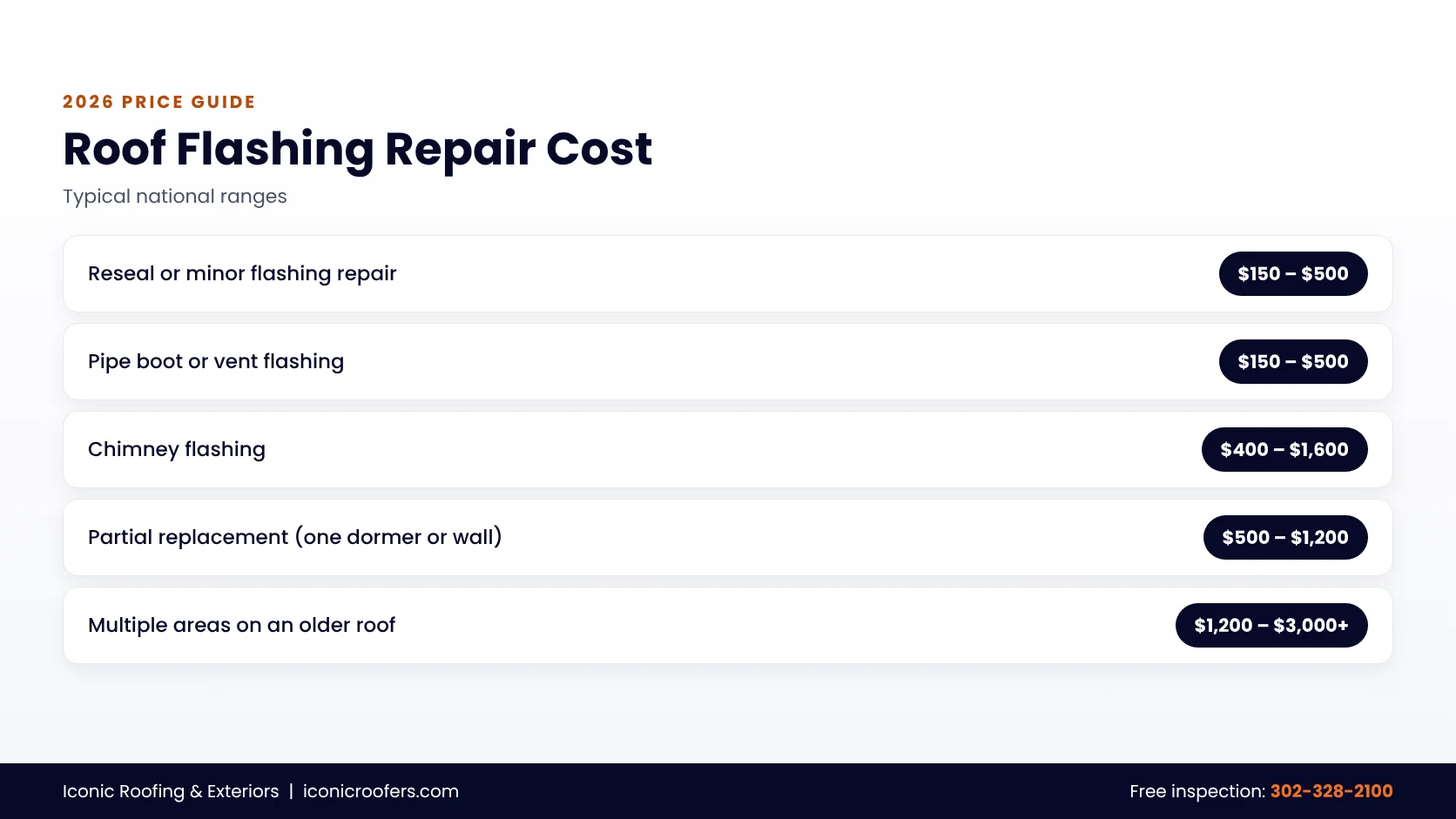
Roof Flashing Repair Cost
| Repair | Typical cost range |
|---|---|
| Reseal or minor flashing repair | $150 – $500 |
| Replace a pipe boot or vent flashing | $150 – $500 |
| Chimney flashing repair or replacement | $400 – $1,600 |
| Partial flashing replacement (one dormer or wall) | $500 – $1,200 |
| Flashing at multiple areas on an older roof | $1,200 – $3,000+ |
These ranges reflect national cost guides; Angi, for example, puts chimney flashing work at about $400 to $1,600. Large or masonry-heavy chimneys, steep roofs and hidden water damage increase the cost.
Repair or Replace Flashing?
Small issues such as a cracked pipe boot or failed sealant can be repaired. Rusted, poorly installed or missing flashing should be replaced. Step flashing is woven into the shingles, so replacing it properly usually means lifting and reinstalling the surrounding shingles. If the roof is near the end of its life, it often makes more sense to replace the flashing as part of a full re-roof.
Should Flashing Be Replaced With a New Roof?
In most cases, yes. Old flashing may look fine but has spent years exposed to weather. Reusing it can create weak spots in an otherwise brand-new roof. A complete replacement should include new drip edge, step flashing, pipe boots and vent flashing, and new or properly reset chimney counter flashing. Ask about it when comparing quotes; our questions to ask a roofer guide includes it. See what is included in our roof replacement in Delaware.
Can You Repair Roof Flashing Yourself?
Some homeowners reseal a pipe boot or touch up caulk, but most flashing repairs involve working on the roof, lifting shingles and working around chimneys, which is risky. A professional can find the real source of the leak, repair it correctly and spot related problems while on the roof.
Flashing Materials Compared
| Material | Pros | Considerations |
|---|---|---|
| Aluminum | Lightweight, affordable, easy to bend, does not rust | Must be kept away from direct contact with masonry mortar and some treated lumber |
| Galvanized steel | Strong and cost-effective | Can rust over time if the coating is damaged |
| Copper | Very long lasting and attractive | Higher cost; must not touch incompatible metals |
| Lead and lead-coated | Very malleable for complex shapes | Less common today; specialized use |
| Rubber and composite boots | Seal around round pipes | Can crack with UV exposure; check regularly |
How Flashing Is Installed Correctly
Good flashing work follows a simple principle: every layer overlaps the one below it so water always runs down and out. At a sidewall, each step flashing piece is installed with its own course of shingles and tucked behind the siding or house wrap. At a chimney, an apron goes on the downhill side, step flashing runs up the sides, a cricket diverts water on the uphill side of wider chimneys, and counter flashing is cut into the mortar joints to cover the top edge.
Ice and water shield is often installed under flashing areas as a second line of defense. Sealant is used to finish joints, but it should never be the main thing keeping water out. When flashing relies only on caulk, leaks are just a matter of time.
Flashing Maintenance Checklist
- Look at chimney and wall flashing from the ground once or twice a year.
- Check for rust, gaps, lifted edges and cracked sealant.
- Inspect pipe boots for cracks, especially on the sun-facing side.
- Keep valleys and the uphill side of chimneys free of leaves and debris.
- After storms, check for bent or loose flashing.
- In the attic, look for stains around chimneys, vents and skylights.
Catching flashing problems early keeps a small repair from turning into rotted decking, damaged drywall and mold.
Flashing and Your Roof Warranty
Shingle manufacturers expect flashing to be installed correctly as part of the roof system. Leaks caused by missing or improper flashing are installation issues, not shingle defects, so they fall under the contractor’s workmanship warranty rather than the manufacturer’s. That is another reason to choose an experienced installer and get the workmanship warranty in writing.
When the Chimney Itself Needs Repair
Sometimes flashing is fine but the chimney is not. Cracked or missing mortar, a damaged crown on top of the chimney or spalling bricks can let water into the masonry, where it appears as a roof leak. A roofer can identify these issues during an inspection. Fixing the chimney masonry and the flashing together gives the best long-term result.
Flashing Repair Across Delaware
Chimney and wall flashing leaks are among the most common repairs we make on Delaware homes, especially on older houses with original chimneys and on homes where previous roofers reused old flashing. Iconic Roofing & Exteriors repairs flashing throughout the state, including Wilmington, Newark, New Castle, Bear, Hockessin and Dover.
Frequently Asked Questions
What is flashing on a roof?
Flashing is thin metal installed where the roof meets chimneys, walls, vents, skylights and valleys. It directs water away from those joints and back onto the shingles.
How long does roof flashing last?
Quality metal flashing can last as long as the roof or longer, but sealants and rubber pipe boots often need attention sooner. Flashing should be inspected regularly and replaced during a re-roof.
How much does it cost to fix chimney flashing?
Chimney flashing repair or replacement commonly costs about $400 to $1,600, depending on the chimney size, roof pitch and condition of the masonry.
Can caulk fix leaking flashing?
Caulk can be a short-term fix, but flashing should work by overlapping layers that shed water. If the flashing itself is damaged or installed wrong, sealant will only delay the leak.
What is kick-out flashing?
Kick-out flashing is a small piece installed at the bottom of a roof-to-wall joint. It directs water into the gutter instead of letting it run down and into the wall.
What is the best material for roof flashing?
Aluminum and galvanized steel are common and cost-effective. Copper is very durable and attractive but costs more. The right choice depends on the roof, chimney and other metals nearby.
Have a Leak Near a Chimney or Skylight?
Iconic Roofing & Exteriors repairs and replaces roof flashing for homes across Delaware. We find the true source of the leak, show you photos and give you a clear written estimate. Learn more about our roof repair services.