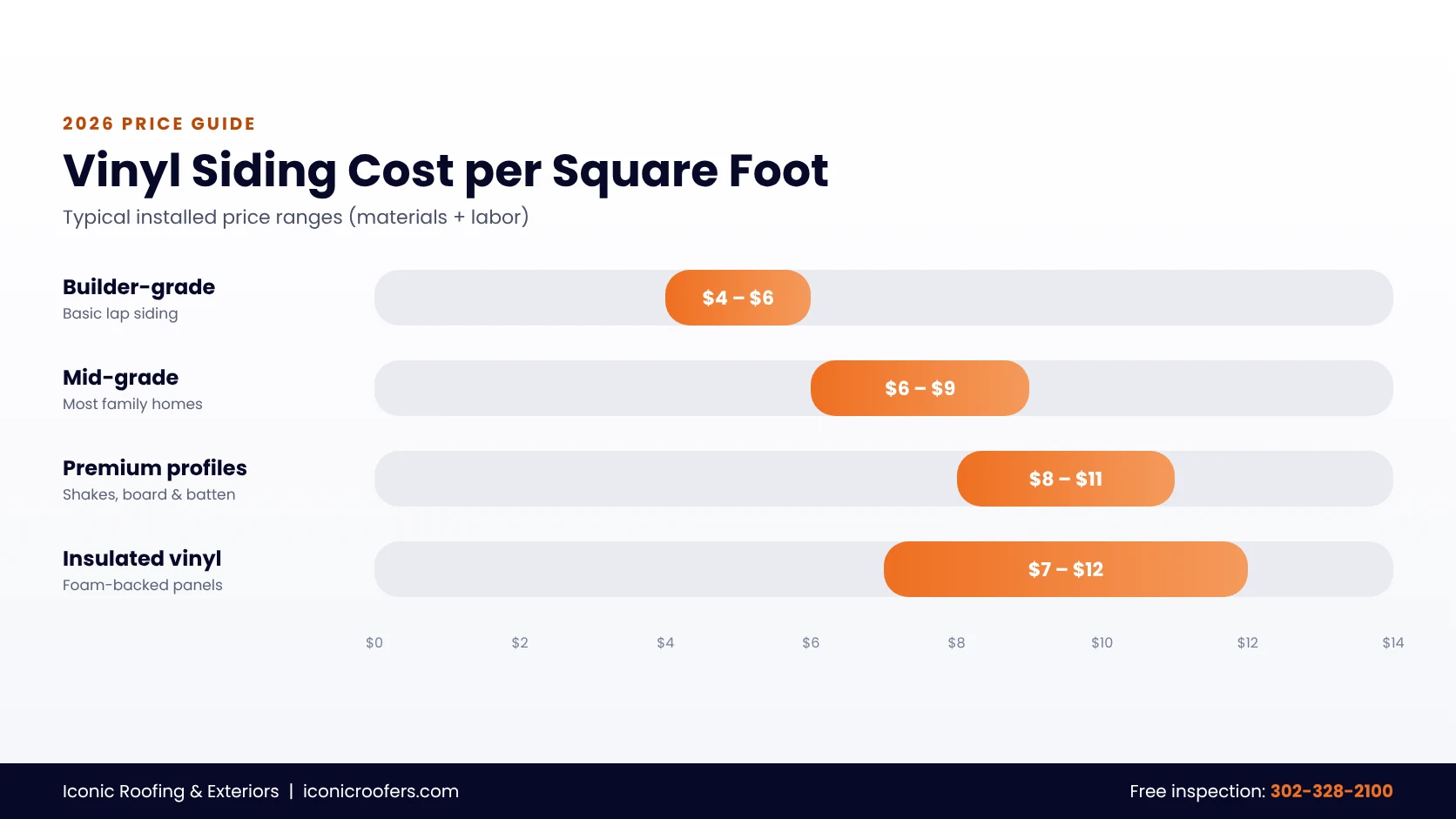
Vinyl siding cost in 2026 usually lands between about $4 and $12 per square foot installed, depending on the siding grade, the shape of your house and how much prep work the walls need. For a typical Delaware home, that often means a total project somewhere in the $10,000 to $25,000 range. Insulated vinyl and premium profiles sit at the top of that range, while basic lap siding on a simple ranch sits at the bottom.
Those numbers are a starting point, not a quote. Two homes on the same street can come in thousands of dollars apart because of wall height, the number of windows, the condition of the sheathing and the trim package. This guide breaks down what goes into the price, how to measure your home, which upgrades are worth it in Delaware’s climate and how to compare contractor quotes with confidence.
Key takeaways
- National 2026 pricing for installed vinyl siding is roughly $4–$12 per square foot, with many projects near $6–$9.
- Price is based on wall area, not your home’s interior square footage.
- Tear-off, sheathing repairs, house wrap and trim are the items most often missing from low quotes.
- Insulated vinyl costs more up front but adds comfort and helps reduce drafts in Delaware winters.
Vinyl Siding Cost per Square Foot in 2026
Siding is measured in “squares.” One square equals 100 square feet of wall coverage. Most contractors still talk in squares, while homeowner guides usually quote prices per square foot, so it helps to know both.
| Vinyl siding type | Installed cost per sq. ft. | Per square (100 sq. ft.) | Best for |
|---|---|---|---|
| Builder-grade lap siding | $4 – $6 | $400 – $600 | Rentals, budget projects, simple homes |
| Mid-grade (thicker panels, better color hold) | $6 – $9 | $600 – $900 | Most Delaware family homes |
| Premium and specialty profiles (shakes, board and batten) | $8 – $11 | $800 – $1,100 | Curb appeal upgrades, accent gables |
| Insulated vinyl siding | $7 – $12 | $700 – $1,200 | Comfort, energy efficiency, noise reduction |
These ranges reflect current national cost guides. Hover’s 2026 siding cost guide puts vinyl at $4 to $12 per square foot installed, and This Old House reports an average vinyl siding project of about $15,315. Homewyse estimated a national average of $7.32 to $12.51 per square foot in May 2026. Local labor rates, access and the details of your home move the final number up or down.
How Much Does Vinyl Siding Cost for a Whole House?
The most common mistake homeowners make is using their home’s living space to estimate siding. Siding covers walls, and walls include gable ends, garages, dormers and second-story areas. A 2,000-square-foot two-story colonial can easily have more than 2,500 square feet of wall area before you subtract windows and doors.
| Home style (approx.) | Wall area to side | Mid-grade vinyl ($6–$9/sq. ft.) |
|---|---|---|
| Small ranch, 1,200 sq. ft. | 1,300 – 1,600 sq. ft. | $7,800 – $14,400 |
| Cape Cod or split-level, 1,700 sq. ft. | 1,800 – 2,200 sq. ft. | $10,800 – $19,800 |
| Two-story colonial, 2,200 sq. ft. | 2,400 – 3,000 sq. ft. | $14,400 – $27,000 |
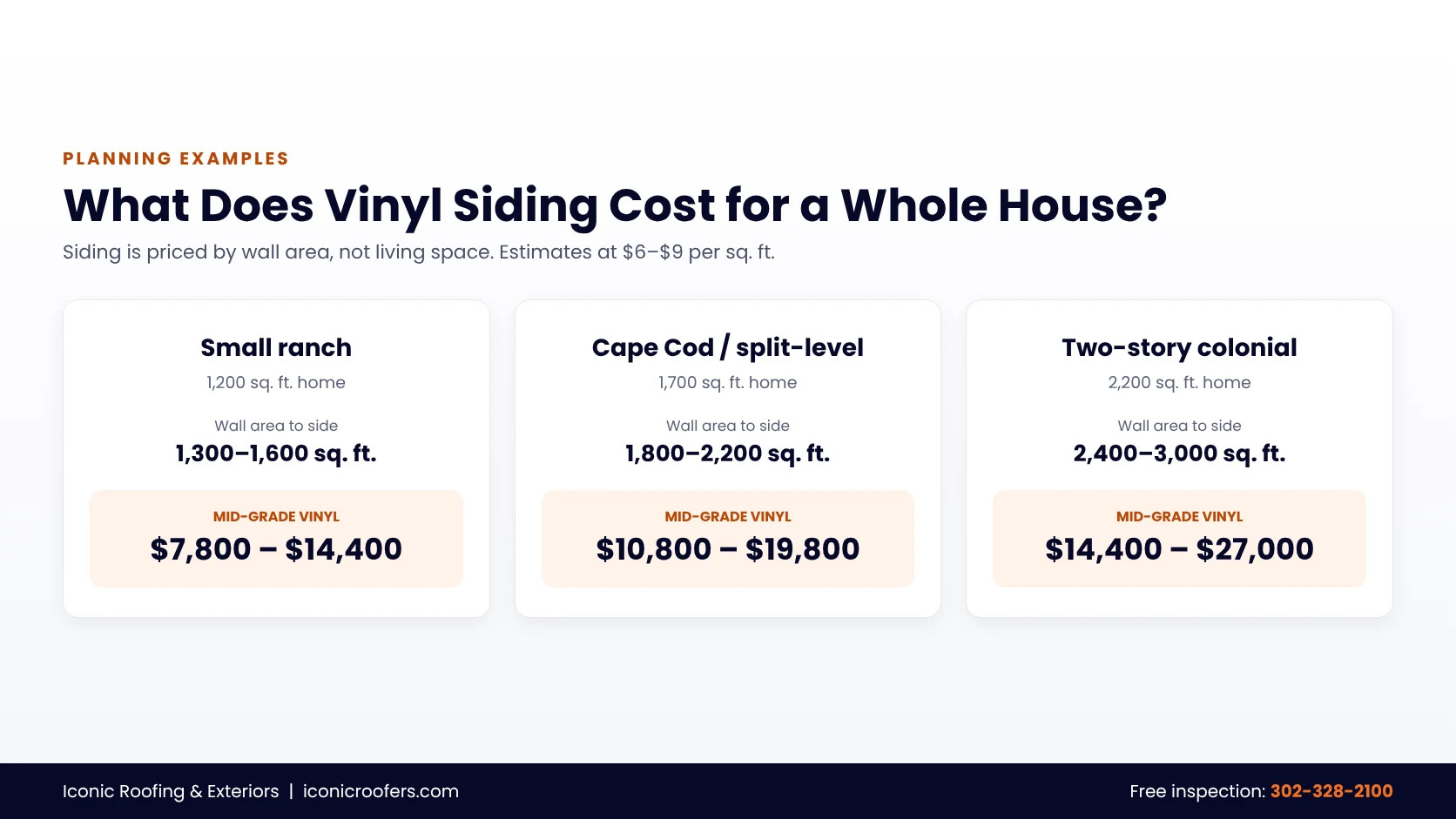
These examples are for planning only. Your actual price depends on the number of corners, openings and trim details, which is why every siding installation quote should start with on-site measurements.
How to estimate your wall area
For a rough number, measure the length of each wall and multiply by its height. For triangular gable ends, multiply the width by the height and divide by two. Add every wall together, then subtract large openings such as garage doors. Most contractors add about 10 percent for waste, cuts and overlaps. The result in square feet, divided by 100, is the number of squares.
What Affects the Price of Vinyl Siding?
Siding grade and thickness
Vinyl siding comes in different thicknesses and profile depths. Thicker panels resist wind, dents and waviness better and tend to hold color longer. Darker and richer colors use more advanced pigments, which can add to the cost. For homes in exposed areas closer to the coast, a sturdier panel with a higher wind rating is a smart upgrade.
Tear-off and disposal
Removing old siding adds labor and dumpster fees. National guides put tear-off at roughly $1,000 to $3,000 for an average home. Siding over old siding is sometimes possible, but tearing off lets the crew inspect and fix the walls underneath, which is usually the better long-term choice.
Sheathing repairs and house wrap
Once old siding comes off, the crew often finds soft spots, rot around windows or missing house wrap. Replacing damaged sheathing and installing a new weather-resistant barrier protects the framing from moisture. These items are easy to leave out of a low quote and expensive to skip.
Trim, soffit and fascia
J-channel, corner posts, window and door trim, soffit vents and fascia wrap complete the system. Homes with lots of windows, bay windows or decorative gables need more trim work. Some quotes include it, others list it separately, so ask.
Home height and access
Second and third stories need scaffolding or lifts and more time. Tight lot lines, decks, landscaping and attached porches also slow the work down. Expect two-story homes to cost more per square foot than single-story homes.
Insulation
Insulated vinyl siding has rigid foam molded to the back of each panel. It adds a layer of insulation over the studs, makes the walls feel more solid and helps reduce drafts and outside noise. In Delaware, where winters bring cold, windy days and summers bring humid heat, many homeowners find that comfort upgrade worth the extra cost.
Local Factors That Affect Siding Cost in Delaware
National price guides are helpful, but a few things specific to Delaware homes can change your quote.
Wind exposure
Homes in open developments, on corner lots or closer to the bay and the beaches catch more wind during nor’easters and summer storms. In those spots, it makes sense to choose a panel with a higher wind rating, use the right fastening schedule and make sure starter strips and trim are installed tightly. Those details cost a little more and help keep panels on the wall when the weather turns.
Humidity and moisture
Humid summers and wet springs mean moisture management matters. A proper weather-resistant barrier, flashing tape around windows and doors, and correct gaps at trim let walls dry out instead of trapping water behind the siding. Skipping these steps is one of the main reasons older siding jobs end up with rot underneath.
Older homes and lead-safe work
Many homes in Wilmington, New Castle and older neighborhoods across the state were built before 1978. If the existing siding or trim has old painted wood, federal lead-safe work rules may apply when that material is disturbed. That can add containment and cleanup steps. It is worth asking any contractor how they handle pre-1978 homes, and you can read more on the EPA’s Renovation, Repair and Painting program page.
HOA rules and permits
Many Delaware communities have homeowners associations with rules about siding colors and profiles. Check your HOA guidelines before choosing a color so your project is not delayed. Some towns and counties also require permits for exterior work. A local contractor should know what your municipality needs and include it in the timeline.
Season and scheduling
Spring and early fall are the busiest seasons for exterior work in Delaware. Booking your project in late fall or winter can sometimes mean more flexible scheduling. Vinyl can be installed in cooler weather as long as the crew handles and cuts it with care.
Choosing Colors and Profiles Without Overspending
Color and style choices affect both price and how happy you are with the result years later. Classic lap siding in light and mid-tone colors is the most affordable and blends well with most neighborhoods. Darker colors look sharp but use more advanced pigments to resist fading, which usually raises the price.
A popular way to add character without paying premium prices on every wall is to mix profiles. Use standard lap siding on the main walls and add shakes or board and batten only on gables or the front entry. Coordinated trim, shutters and a contrasting front door can make a home look custom while keeping the overall siding budget in check.
Vinyl vs. Other Siding Materials
Vinyl is the most affordable and lowest maintenance option, but it is not the only one. Here is how it compares with other popular choices for Delaware homes.
| Material | Typical installed cost per sq. ft. | Maintenance | Notes |
|---|---|---|---|
| Vinyl | $4 – $12 | Very low | Best value, wide color range, never needs paint |
| Fiber cement (such as James Hardie) | $9 – $20 | Low to moderate | Very durable, fire resistant, can be repainted |
| Engineered wood | $6 – $12 | Moderate | Real wood look with better resistance than natural wood |
| Natural wood or cedar | $8 – $18 | High | Beautiful but needs regular paint or stain |
For a deeper look at each option, see our siding options for Delaware homes. If you are only dealing with a few damaged panels, a siding repair may be all you need.
Is Vinyl Siding Worth It?
For most Delaware homeowners, yes. Vinyl siding protects the walls from rain and wind, never needs painting and refreshes the look of the home in a few days of work. New siding is also one of the most visible upgrades when it comes time to sell, because the exterior is the first thing buyers see in listing photos and on a drive-by.
Vinyl is a good fit when you want low maintenance, a clean modern look and the best value per square foot. Fiber cement may be worth the higher price if you want a heavier, more rigid board, a painted finish or extra fire resistance.
Signs It Is Time to Replace Your Siding
- Cracked, warped or loose panels that keep coming back after repairs
- Fading so strong that one side of the house no longer matches the other
- Bubbling or blistering, which can mean moisture trapped behind the panels
- Soft spots, mold or mildew on the walls inside the home
- Rising heating and cooling bills combined with drafty rooms
- Siding that has been damaged by a storm across several walls
If you see these signs, start with an inspection. Sometimes a repair solves the problem. Other times, full siding replacement is the better investment.
How to Compare Vinyl Siding Quotes
The lowest number is not always the lowest cost. When you compare quotes, check that each one includes the same items:
- Total wall area or number of squares
- Siding brand, product line, thickness and color
- Tear-off and disposal of old siding
- Sheathing repair allowance and price per sheet for extra repairs
- House wrap or weather-resistant barrier
- Trim, corners, soffit and fascia
- Permits, cleanup and timeline
- Manufacturer warranty and workmanship warranty
Also confirm that the contractor is registered in Delaware, carries liability insurance and workers’ compensation, and can show local reviews and finished projects.
Ways to Make New Siding More Affordable
A few smart choices can bring the cost down without cutting corners. Choose a mid-grade panel instead of the top line, keep premium profiles such as shakes for accent areas like gables, and schedule the project together with other exterior work so setup costs are shared. Many homeowners replace siding at the same time as windows or gutters for a complete exterior refresh.
If you prefer to pay over time, flexible financing options can turn a large project into manageable monthly payments.
Frequently Asked Questions
How much does vinyl siding cost per square foot installed?
In 2026, installed vinyl siding generally costs about $4 to $12 per square foot. Basic panels on a simple single-story home are at the low end, while insulated vinyl and premium profiles on taller homes are at the high end.
How much does it cost to side a 2,000-square-foot house with vinyl?
Many 2,000-square-foot homes have 2,200 to 2,800 square feet of wall area. At mid-grade pricing, that often means roughly $13,000 to $25,000. An on-site measurement is the only way to get an accurate number.
Is insulated vinyl siding worth the extra cost?
For many Delaware homes, it is. The foam backing adds a layer of insulation over the studs, reduces drafts and makes the panels stiffer. It costs more up front, so it makes the most sense if you plan to stay in the home for several years.
How long does vinyl siding last?
Quality vinyl siding often lasts 20 to 40 years when it is installed correctly. Panel thickness, color, sun exposure and installation quality all affect lifespan.
How long does a vinyl siding installation take?
Most homes take a few days to about a week, depending on size, height, weather and how much wall repair is needed after tear-off.
Can vinyl siding be installed in winter?
Yes, with care. Vinyl becomes stiffer in cold weather, so experienced installers handle and cut it carefully and leave the right expansion gaps. Many Delaware siding projects are completed in late fall and early spring.
Get a Free Vinyl Siding Estimate in Delaware
The best way to know your real vinyl siding cost is a free on-site estimate. Iconic Roofing & Exteriors measures every wall, checks the condition of the sheathing and gives you a clear written quote with no pressure. We install vinyl, insulated vinyl and fiber cement siding on homes throughout Delaware.
Call 302-328-2100 or request your free siding estimate online.