Flat roof replacement cost for a home usually falls between about $4 and $14 per square foot installed, depending on the membrane you choose, the insulation underneath and how much of the old roof has to be torn off. For many residential flat roofs, that means a total project of roughly $3,500 to $12,000, with larger roofs, more insulation and complex details pushing the price higher.
Flat and low-slope roofs are common in Delaware on rowhomes, additions, porches, garages, dormers and commercial buildings. They work very differently from shingle roofs, so pricing works differently too. This guide explains what drives the cost, compares TPO, EPDM and modified bitumen, and shows you what a complete flat roof quote should include.
Key takeaways
- Typical residential flat roof replacement runs about $4–$14 per square foot installed.
- Modified bitumen is usually the most budget-friendly, TPO is the popular energy-efficient option and EPDM is the proven rubber choice.
- Tear-off, wet insulation and damaged decking are the biggest hidden costs.
- Proper drainage and well-sealed edges matter as much as the membrane itself.
Flat Roof Replacement Cost by Material
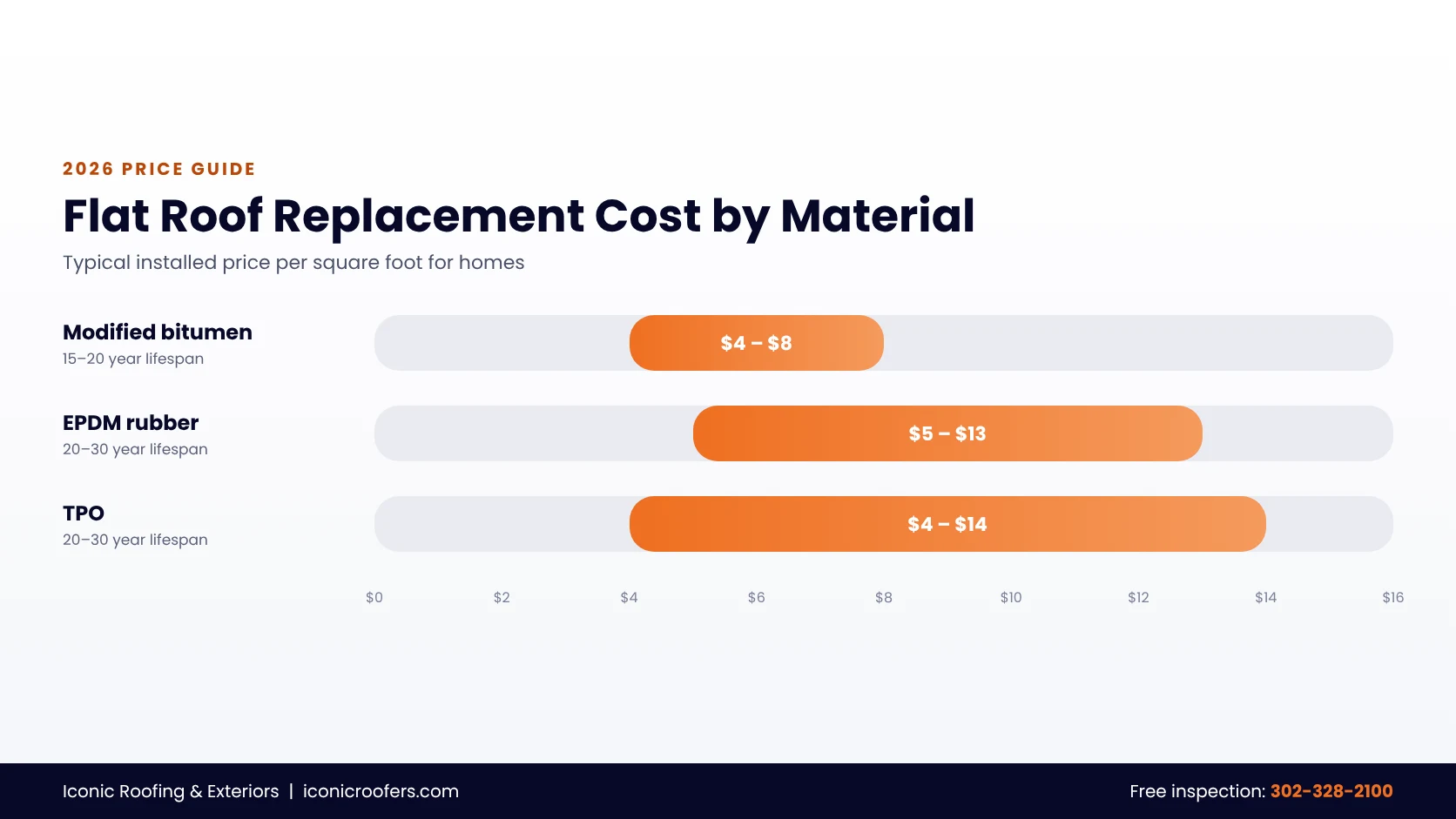
The membrane is the biggest single factor in your price. Here is how the three most common residential flat roof systems compare.
| Material | Typical installed cost per sq. ft. | Expected lifespan | Best for |
|---|---|---|---|
| Modified bitumen | $4 – $8 | 15 – 20 years | Budget projects, roofs with some foot traffic |
| EPDM (rubber) | $5 – $13 | 20 – 30 years | Proven performance, cold-weather flexibility |
| TPO | $4 – $14 | 20 – 30 years | Energy efficiency, heat-welded seams |
These ranges come from national cost guides. HomeAdvisor reports an average flat roof replacement of about $7,402, with modified bitumen averaging around $6 per square foot, EPDM at $5 to $13 and TPO at $4 to $14 per square foot. Lifespans vary with installation quality, drainage and maintenance.
Modified bitumen
Modified bitumen is an asphalt-based roll roofing that is installed in layers. It is tough, handles foot traffic well and is often the most affordable option. Many flat roofs on older homes and porches in the Mid-Atlantic use it. The trade-off is a shorter typical lifespan than single-ply membranes, and some application methods need careful heat work.
EPDM rubber roofing
EPDM is a synthetic rubber membrane that has been used on flat roofs for decades. It stays flexible in cold weather, which suits Delaware winters, and it repairs easily. Black EPDM absorbs heat in summer, which can raise the temperature of rooms below. Seams are glued or taped, so seam quality is critical.
TPO roofing
TPO is a single-ply membrane, usually white, that reflects sunlight and helps keep the space below cooler in summer. Its seams are heat welded, which creates a strong, continuous bond. TPO has become one of the most popular choices for new flat roofs on homes and commercial buildings.
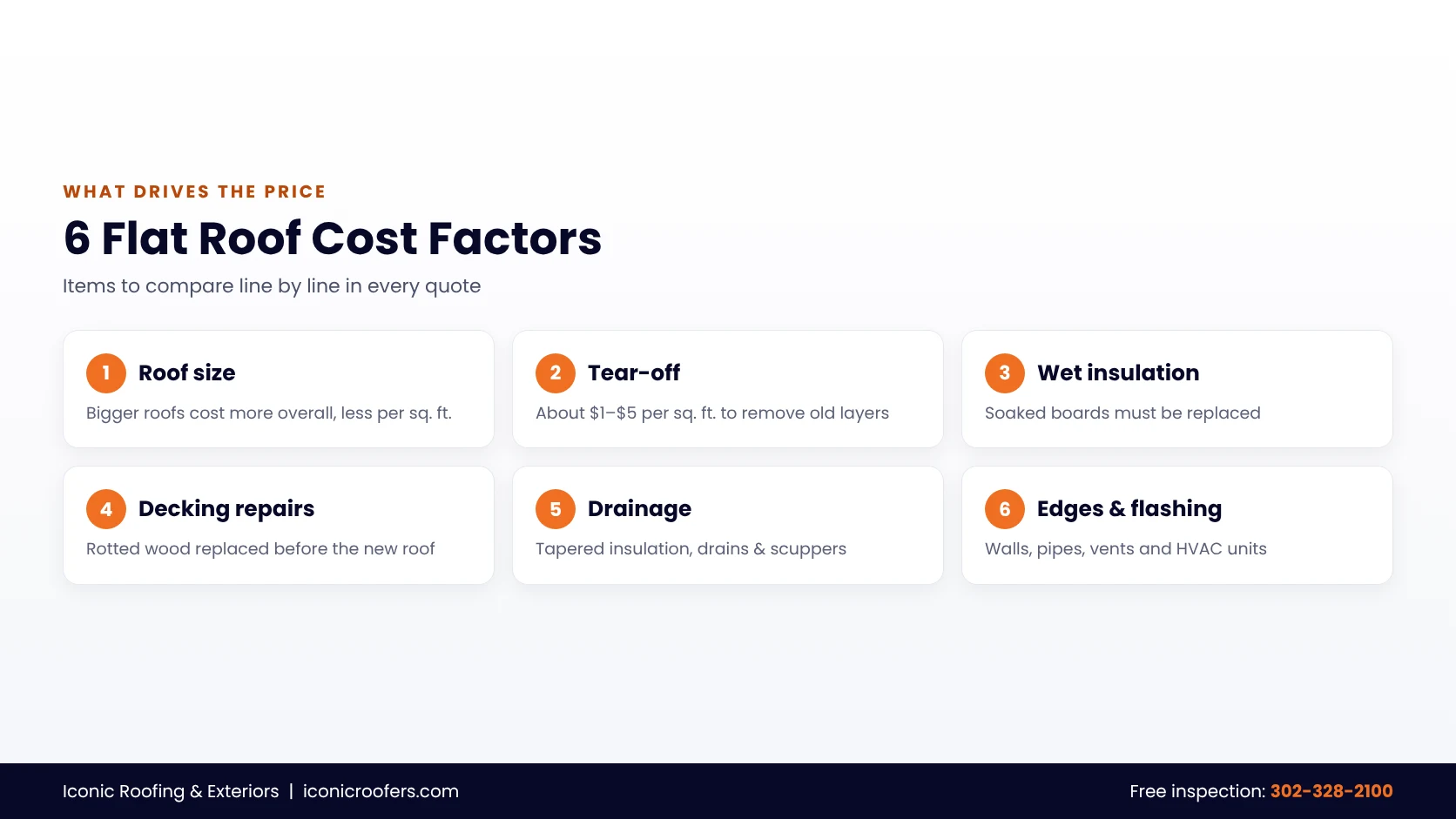
What Affects the Cost of a Flat Roof Replacement?
Roof size
Larger roofs cost more in total but usually less per square foot, because setup, delivery and disposal are spread over more area. Very small roofs, such as a porch or bay window, often have a minimum job charge.
Tear-off and disposal
Most flat roof replacements require removing the old membrane and any wet materials. National cost guides put flat roof tear-off at roughly $1 to $5 per square foot. Multiple old layers add time and dumpster weight.
Insulation and wet materials
Flat roofs often have rigid insulation boards under the membrane. If water has been getting in, that insulation may be soaked and must be replaced. New insulation can also bring the roof up to current energy code and improve comfort below. Replacing insulation commonly adds about $1 to $2 per square foot or more, depending on thickness.
Decking repairs
Long-term leaks can rot the wood decking. Damaged sections must be replaced before the new roof goes on. A good contractor will show you photos and explain repair pricing before doing the work.
Drainage
Flat roofs are not truly flat. They need a slight slope toward drains, scuppers or gutters so water does not sit. Ponding water is one of the main reasons flat roofs fail early. Adding tapered insulation, new scuppers or larger drains increases the price, but it fixes the root cause of many leaks.
Edges, walls and penetrations
Every pipe, vent, skylight, HVAC unit and wall connection needs flashing. Roofs with many penetrations or where a flat roof meets a sloped roof or siding take more detail work. Proper edge metal and flashing are where many leaks start, so they are worth paying for.
Access and building height
Rowhomes with tight access, upper-story roofs and roofs over finished living spaces may need extra protection, hoisting equipment or hand carrying, which adds labor.
Example Flat Roof Replacement Costs
| Project | Approx. size | Typical range |
|---|---|---|
| Porch or bay window roof | 100 – 200 sq. ft. | $1,000 – $3,000 (minimum charges apply) |
| Garage or addition | 300 – 600 sq. ft. | $2,000 – $7,000 |
| Rowhome or full flat-roof house | 800 – 1,500 sq. ft. | $4,000 – $16,000 |
These are planning ranges. Your price depends on the material, insulation, tear-off and the condition of the decking, which can only be confirmed during an inspection.
How Delaware Weather Affects Flat Roofs
Flat roofs in Delaware deal with a mix of conditions that each wear on the membrane in a different way. Knowing them helps you choose the right system and understand why details matter.
Freeze-thaw cycles
Winter temperatures in Delaware often swing above and below freezing. Water that sits in low spots or under loose seams can freeze, expand and widen small openings. Over a few winters, that turns minor defects into leaks. Good slope and well-sealed seams are the best defense.
Summer heat and sun
On a sunny summer day, a dark flat roof can get very hot. Heat and UV exposure age membranes and can make rooms below uncomfortable. Reflective membranes such as white TPO, or reflective coatings on some systems, help reduce heat build-up.
Heavy rain and ponding
Spring storms and tropical remnants can drop a lot of rain in a short time. If drains or scuppers are too small or clogged, water backs up and ponds. Ponding adds weight, speeds up wear and finds every weak seam. That is why drainage is part of every serious flat roof quote.
Wind at the edges
Wind creates uplift at the edges and corners of a flat roof. Coastal storms and summer thunderstorms test those areas first. Properly fastened edge metal, secure perimeter attachment and quality flashing keep the membrane from peeling back.
Snow and ice
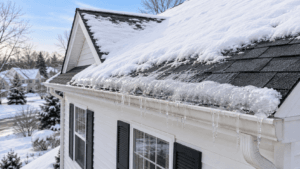
Delaware does not get heavy snow every year, but when it does, snow and ice can sit on flat roofs longer than on sloped ones. Clear drains before winter and avoid using sharp tools to remove ice, which can puncture the membrane.
Flat Roof Maintenance Tips That Extend Its Life
A new flat roof is a big investment, and a little maintenance protects it. Have the roof inspected once or twice a year and after major storms. Keep drains, scuppers and gutters clear of leaves and debris, especially in the fall. Trim branches that hang over the roof so they do not scrape the membrane or drop debris.
Limit foot traffic to what is necessary, and ask HVAC or satellite technicians to use walk pads where possible. Watch the ceilings below for any new stains and deal with small problems quickly. Most flat roof leaks start small and are inexpensive to fix early, but they become costly once water soaks the insulation and decking.
Signs Your Flat Roof Needs Replacement
- Water that stays on the roof for more than about 48 hours after rain
- Blisters, bubbles or wrinkles in the membrane
- Cracks, splits or open seams
- Soft or spongy spots when you walk on the roof
- Repeated leaks in different places, even after repairs
- Stains on ceilings below the flat roof
- A roof that is past its expected lifespan
A single leak does not always mean replacement. If the membrane is in good shape overall, a targeted flat roof repair may be the right move. When problems are widespread or the insulation is wet, replacement is usually the more cost-effective choice over time.
Flat Roof Repair vs. Replacement
Repair makes sense when damage is limited to a small area, the membrane is still flexible and the insulation underneath is dry. Replacement makes sense when there are many patches, large areas of ponding, wet insulation or a roof near the end of its life. For a broader look at how roofs age by material, see our guide on how long a roof lasts.
If your home has both pitched and flat sections, it can be smart to plan them together. Replacing a flat section at the same time as a full roof replacement means all the transitions and flashing are new and built to work together.
How to Compare Flat Roof Quotes
Ask every contractor to spell out the same items so you can compare fairly:
- Membrane type, brand and thickness
- Tear-off of existing layers and disposal
- Insulation type and thickness, and allowance for wet insulation
- Price for decking repairs per sheet
- Drainage improvements such as tapered insulation, drains or scuppers
- Edge metal, wall flashing and penetration details
- Manufacturer warranty and workmanship warranty
- Timeline and how the interior will be protected
Also confirm that the contractor is registered in Delaware, carries insurance and has experience with the specific membrane they are proposing.
Paying for a New Flat Roof
If your flat roof was damaged by a sudden event such as wind or a fallen limb, your homeowners insurance may help, depending on your policy. Age-related wear usually is not covered. For planned replacements, roof financing lets you spread the cost into monthly payments.
Frequently Asked Questions
How much does it cost to replace a flat roof per square foot?
Most residential flat roof replacements cost about $4 to $14 per square foot installed. Modified bitumen is usually at the lower end, while TPO and EPDM with new insulation are often in the middle to upper range.
What is the cheapest flat roof material?
Modified bitumen is often the most affordable option up front. TPO and EPDM usually cost more but may last longer and need fewer repairs.
Is TPO or EPDM better?
Both are good choices. TPO reflects heat and has heat-welded seams, which many homeowners like for rooms below the roof. EPDM is very flexible in cold weather and has a long track record. Your roof’s size, use and drainage help decide which fits best.
How long does a flat roof last?
Modified bitumen roofs often last 15 to 20 years, while TPO and EPDM roofs often last 20 to 30 years. Good drainage and regular inspections help any flat roof reach the upper end of its lifespan.
Can you put a new flat roof over the old one?
Sometimes, but it is usually not the best choice. A roof-over can trap wet insulation and hide damaged decking. Removing the old roof lets the contractor fix what is underneath and gives the new membrane a clean, dry base.
What is the best flat roof material for a home in Delaware?
There is no single best answer for every home. TPO is a strong choice when you want a reflective, energy-efficient roof over living space. EPDM works well where cold-weather flexibility and easy repairs matter. Modified bitumen is a good fit for porches and areas with foot traffic or tighter budgets. A local inspection that looks at drainage, use and the rooms below is the best way to choose.
Should I add insulation when replacing a flat roof?
In many cases, yes. Replacement is the easiest time to add or upgrade rigid insulation, because the roof is already open. Better insulation can make rooms below more comfortable year-round, and tapered insulation can also improve drainage at the same time.
How long does a flat roof replacement take?
Many residential flat roofs are replaced in one to three days, depending on size, weather and the amount of repair needed under the old roof.
Get a Free Flat Roof Estimate in Delaware
Iconic Roofing & Exteriors repairs and replaces flat and low-slope roofs on homes across Delaware. We inspect the membrane, insulation and drainage, explain your options and give you a clear written estimate.
Call 302-328-2100 or request your free flat roof estimate online. You can also browse our service area to see the communities we serve.