A roof insurance claim in Delaware usually follows the same path: you protect the home, document the damage, report the loss to your insurer, meet the adjuster, review the settlement and then schedule the repair or replacement. If the damage came from a sudden event such as wind, hail or a fallen tree, a standard homeowners policy often helps pay for it. Wear and tear from age usually does not.
That sounds simple on paper. In real life, the days after a nor’easter or summer thunderstorm can feel confusing. Water is coming through the ceiling, neighbors are getting knocks on the door from out-of-state crews, and the policy booklet reads like a legal contract (because it is one).
This guide walks Delaware homeowners through the full roof insurance claim process. It covers what insurance typically covers, the deadlines insurers have to meet under Delaware rules, how to prepare for the adjuster visit and what a roofing contractor is and is not allowed to do for you during a claim.
Key takeaways
- Homeowners insurance usually covers roof damage from sudden events like wind, hail and falling trees, not damage caused by age, neglect or poor installation.
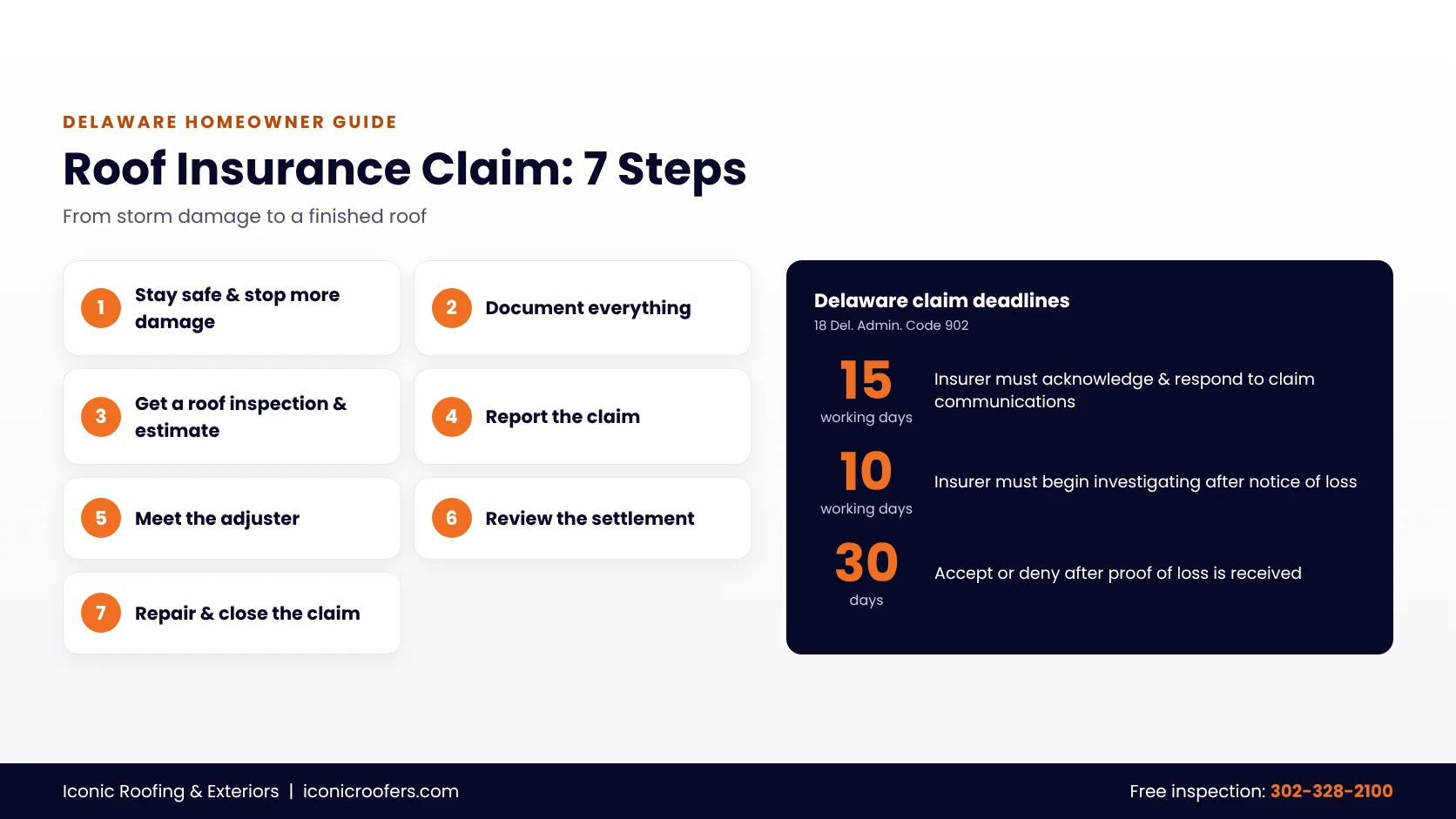
- Delaware rules require insurers to acknowledge claim communications within 15 working days and to accept or deny a claim within 30 days after receiving proof of loss.
- Photos, dates and a written repair estimate make your claim much stronger.
- In Delaware, a roofer can inspect, write an estimate and be present at the adjuster meeting, but only a licensed public adjuster can negotiate the claim for you.
Does Homeowners Insurance Cover Roof Replacement?
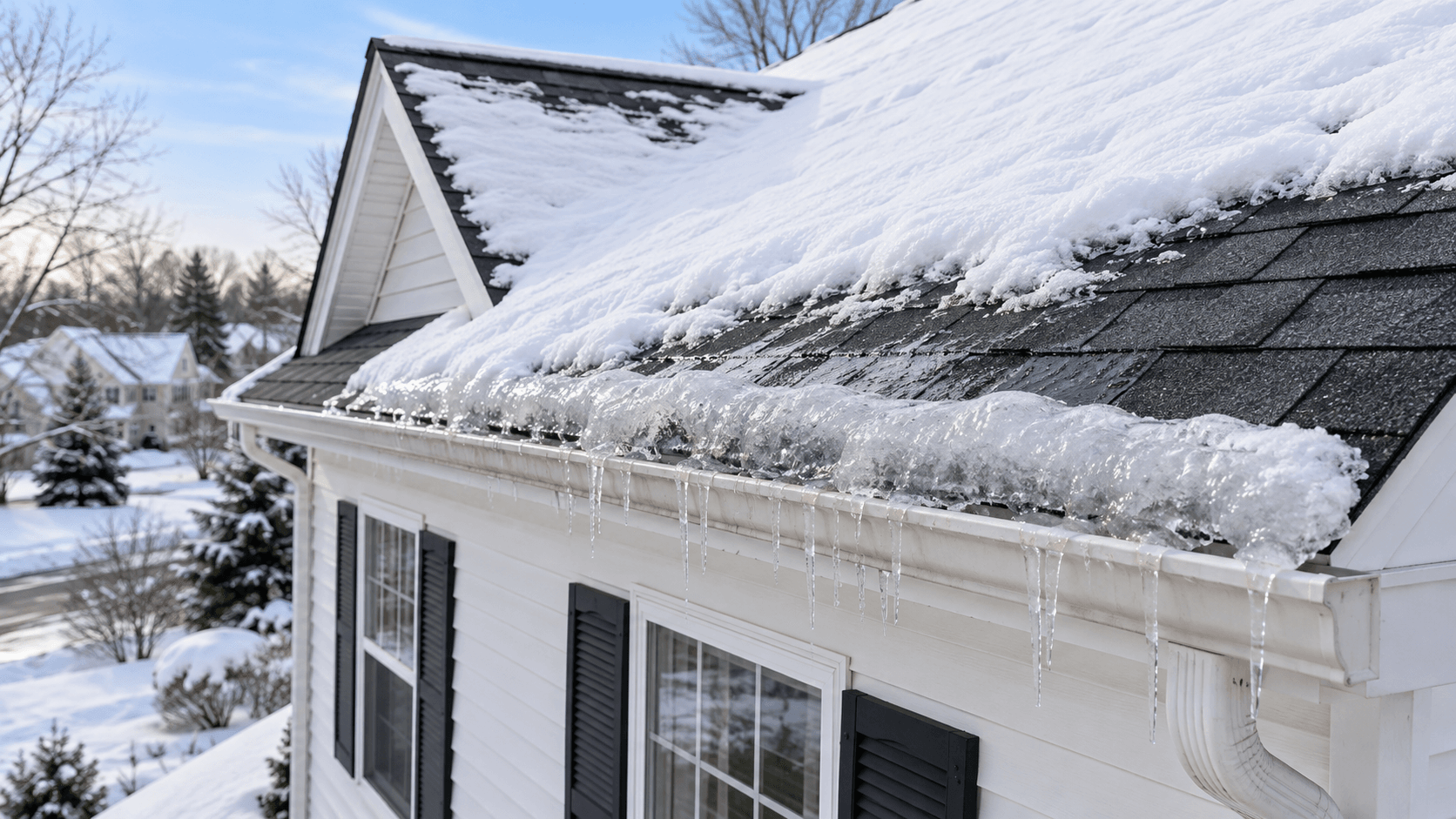
Most standard homeowners policies cover a roof when the damage comes from a sudden, accidental event that the policy lists as a covered peril. For Delaware homes, the most common covered causes are wind, hail, fallen trees and limbs, and the weight of ice or snow. Fire and lightning are typically covered as well.
What insurance usually does not cover is a roof that has simply worn out. Curling shingles on a 25-year-old roof, granule loss from years of sun, moss, rot from long-term leaks and problems caused by poor installation are generally treated as maintenance issues. Flood damage is also a separate policy, so storm surge and rising water are normally excluded from a standard homeowners plan.
Whether your specific loss is covered depends on your policy wording, your deductible and the cause of the damage. Your insurance agent or the insurer itself is the right source for a coverage decision. Read the declarations page first, because it lists your deductible, your coverage limits and whether you have a separate wind or hurricane deductible.
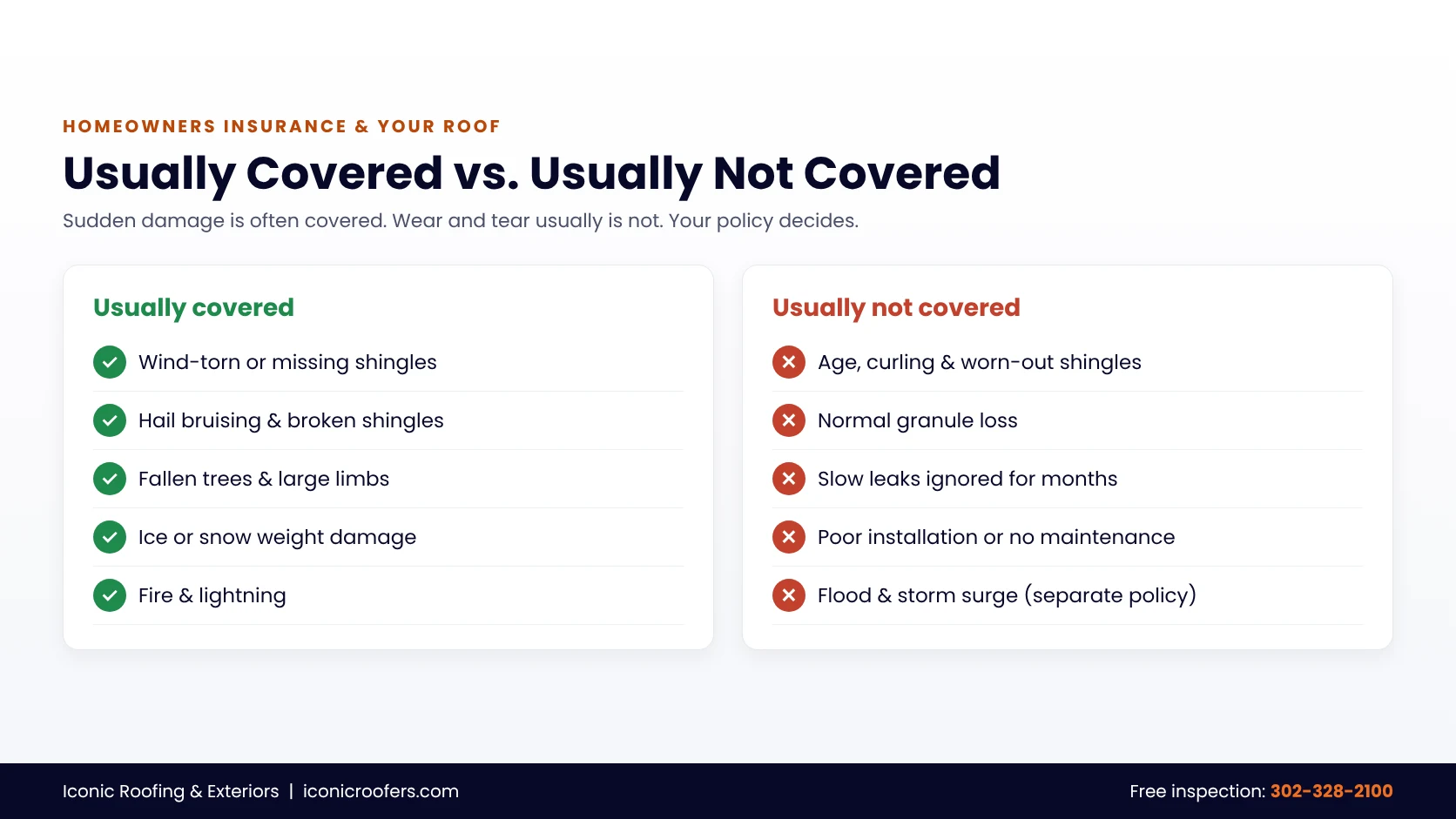
Covered vs. usually not covered
| Usually covered (sudden damage) | Usually not covered |
|---|---|
| Shingles torn off by high winds | Old shingles that are curling or cracked from age |
| Hail bruising and broken shingles | Granule loss from normal weathering |
| A tree or large limb falling on the roof | Slow leaks that were ignored for months |
| Ice or snow weight damage | Damage from poor installation or missing maintenance |
| Fire and lightning | Flood and storm surge (needs separate flood insurance) |
Replacement cost vs. actual cash value
Two policy terms make a big difference in how much you receive. A replacement cost value (RCV) policy pays to repair or replace the damaged roof with similar materials at today’s prices, minus your deductible. Many insurers pay this in two parts: a first payment based on depreciated value, then the remaining “recoverable depreciation” after the work is complete and you send the final invoice.
An actual cash value (ACV) policy pays the depreciated value of the roof. On an older roof, that can be far less than the cost of a new one. Some policies use a separate roof payment schedule that reduces payment based on the roof’s age. If you are not sure which type you have, ask your agent before the adjuster visit, not after.
The Roof Insurance Claim Process, Step by Step
Here is the order that works best for most Delaware homeowners after a storm.
Step 1: Stay safe and stop more damage
Do not climb on a wet or damaged roof. From the ground, look for missing shingles, debris and anything hanging from the gutters. Inside, move furniture and electronics away from leaks, catch dripping water and take photos before you clean up.
Most policies require you to take reasonable steps to prevent further damage. That can mean a temporary tarp over an exposed area. Keep receipts for any emergency repairs, because those costs are often part of the claim.
Step 2: Document everything
Good documentation is the backbone of any roof insurance claim. Take wide shots and close-ups of the roof from the ground, damaged gutters, siding, windows, fallen limbs and every interior stain or drip. Write down the date and approximate time of the storm.
The Delaware Department of Insurance recommends keeping an organized claim file with claim numbers, copies of all correspondence and repair estimates. A simple folder on your phone and a notebook with dates, names and phone numbers of everyone you speak with will save you a lot of stress later.
Step 3: Get a professional roof inspection and written estimate
Before or right after you report the loss, have a local, registered roofing contractor inspect the roof. A professional can safely check areas you cannot see from the ground, such as the ridge, valleys, flashing around chimneys and vents, and the condition of the decking.
The contractor’s job is to tell you what they see and prepare a written estimate and scope of work for the repair or replacement. That estimate gives you a clear picture of what the repair really involves, so you can compare it with what the insurer offers later. At Iconic Roofing & Exteriors, this roof inspection and estimate is free.
Step 4: Report the claim to your insurer
Call your insurer or file online as soon as possible. Many policies require “prompt” notice and some set a specific time limit, so do not wait until the end of the season. Give the date of loss, a short description of the damage and your photos. Ask for your claim number and the name of the adjuster assigned.
Step 5: Prepare for the adjuster visit
The insurance adjuster will inspect the roof and decide what the policy will pay. Have your photos, the date of the storm, any emergency repair receipts and your contractor’s estimate ready. Walk the adjuster through the interior damage as well, not just the roof.
You can ask your roofing contractor to be present during the inspection. In Delaware, a contractor is allowed to attend the adjuster meeting, discuss their estimate and answer questions about it. That helps make sure damage in hard-to-see spots is not missed.
Step 6: Review the settlement carefully
When the insurer sends the estimate, compare it line by line with your contractor’s scope. Common gaps include missing drip edge, ice and water shield, starter strips, ridge vents, flashing, permit fees and the cost to remove old layers. If something is missing, ask the insurer in writing how it was considered.
If you disagree with the decision, you can ask for a re-inspection, submit additional documentation, use the appraisal clause in your policy if it has one, or hire a licensed public adjuster to represent you.
Step 7: Complete the repair and close the claim
Once the scope is agreed, schedule the work. If your policy holds back depreciation until the job is done, send the final invoice and completion photos to the insurer to release that last payment. Keep all paperwork with your home records, because future buyers and insurers often ask about the roof’s age and history.
How Long Does a Roof Insurance Claim Take in Delaware?
Delaware has clear rules on how quickly insurers must handle claims. Under the state’s unfair claim settlement practice regulation (18 Del. Admin. Code 902), insurers must:
- Acknowledge and respond to claim communications within 15 working days.
- Begin investigating a claim within 10 working days after receiving notice of the loss.
- Accept or deny the claim within 30 days after receiving proof of loss statements.
In practice, a simple wind claim may be inspected and paid within a few weeks. After a large regional storm, adjusters are busier and the timeline can stretch. Keeping your claim file organized and responding quickly to requests is the best way to keep things moving. You can read the regulation itself on the Delaware Administrative Code website.
What a Roofer Can and Cannot Do During a Claim in Delaware
This is one of the most misunderstood parts of the process, and it matters. The Delaware Department of Insurance has published a bulletin that clearly separates the roles of contractors and adjusters.
Without a public adjuster license, a Delaware contractor can offer repair services, give an opinion on whether damage looks storm-related, prepare an estimate and scope of work, discuss that estimate with you, be present when the insurer’s adjuster inspects the damage, and answer questions about the estimate.
A contractor cannot negotiate the claim with the insurance company for you, prepare or submit the claim on your behalf, review your policy and tell you whether damage is covered, or advertise that they “handle insurance claims.” Performing those acts without a public adjuster license can be treated as insurance fraud under Delaware law. You can read the full rules in the Department’s Adjuster Bulletin No. 28.
What does that mean for you? A good roofer will give you an honest inspection and a detailed estimate, show up at the adjuster meeting and then do quality work. If you want someone to argue your claim, that is the role of a licensed public adjuster or an attorney.
Red Flags: Storm Chasers and Deductible Offers
After big storms, Delaware neighborhoods often see door-to-door crews from out of state. Some do fine work. Others disappear before the warranty ever matters. Watch for these warning signs:
- “We’ll cover your deductible.” Your deductible is your share of the loss. A contractor who offers to waive it or hide it in a padded estimate is asking you to take part in insurance fraud.
- Pressure to sign today. A real contractor gives you a written estimate and time to think.
- Signing over your claim. Be careful with any document that assigns your insurance benefits or gives a contractor power of attorney over your claim.
- No local address. Ask for a Delaware business license, proof of insurance and local references.
- Large cash deposits. Pay according to a written contract, not to a stranger with a truck.
Delaware requires contractors to be registered with the state, so ask for proof. For more tips on choosing the right team, see our guide on how to find the best roofing contractor in your area.
Repair or Replacement: How the Insurer Decides
Adjusters generally decide between a repair and a full replacement based on how widespread the damage is and whether a repair can match the existing roof. Scattered wind damage to a few shingles is often handled as a repair. Hail that bruised shingles across every slope, or wind damage on a roof where the shingles are discontinued and cannot be matched, may lead to a replacement of one or more slopes or the full roof.
Roof age plays a role too, especially with ACV policies or roof payment schedules. If you are curious how your roof’s age compares with typical lifespans, read our guide on how long a roof lasts. For a homeowner-friendly comparison, see the section on roof repair vs. replacement on our roof replacement page.
What If Insurance Does Not Cover Your Roof?
Sometimes the inspection shows the roof is simply at the end of its life, or the damage cost is close to your deductible. In that case, a planned replacement may make more sense than a claim. Filing small claims can also affect future premiums, so it is worth getting a professional estimate before deciding.
If you need a new roof but do not have the full budget today, flexible roof financing can spread the cost into monthly payments. Many homeowners also choose to replace gutters at the same time so the whole drainage system is new.
Frequently Asked Questions
Does homeowners insurance cover roof replacement in Delaware?
It often does when the damage comes from a sudden covered event such as wind, hail or a fallen tree. It usually does not cover roofs that failed from age, lack of maintenance or poor installation. Your policy wording and deductible decide the final answer, so confirm coverage with your agent or insurer.
How long do I have to file a roof insurance claim?
Most policies require prompt notice after a loss, and many list a specific deadline in the conditions section. Report damage as soon as it is safe to do so. Waiting can make it harder to prove that a specific storm caused the damage.
Will my premium go up if I file a roof claim?
It can. Insurers look at claim history when setting rates, and weather-related claims are treated differently by different companies. Ask your agent how a claim may affect your policy before you file, especially if the repair cost is close to your deductible.
Should my roofer meet the insurance adjuster?
Yes, it is a good idea. In Delaware, your contractor can be present during the adjuster’s inspection, explain their estimate and answer questions. They cannot negotiate the claim for you.
What if the insurance company denies my roof claim?
Ask for the denial in writing with the policy language it relies on. You can submit more evidence, request a re-inspection, use the appraisal process if your policy includes one, hire a licensed public adjuster, or contact the Delaware Department of Insurance Consumer Services Division at 1-800-282-8611.
Can a roofer pay my deductible?
No. Offering to waive, absorb or hide a deductible inside an inflated estimate can be treated as insurance fraud. Walk away from any contractor who offers it.
Get a Free Storm Damage Inspection in Delaware
If a recent storm has you worried about your roof, start with facts. Iconic Roofing & Exteriors provides free roof inspections and detailed written estimates across Delaware. We document what we find with photos, explain your options in plain language and can be on site when your adjuster inspects the roof.
Call 302-328-2100 or request your free inspection online. You can also explore our roof replacement services in Delaware or our full service area.
This article is general information, not legal or insurance advice. For questions about your policy, contact your insurance agent, your insurer or the Delaware Department of Insurance.